

Enquiry List () (0)


- Aug 19, 2020

Identifying Where Chemical Exposure Risks Arise in Data Centres

Data centres are often viewed as clean, controlled environments with relatively low day-to-day safety risks. In many areas of a facility, particularly within server halls themselves, that assumption may appear accurate. However, the infrastructure required to maintain uptime, cooling performance and operational resilience can introduce chemical hazards in less visible parts of the site.
Behind the server environment, many facilities rely on complex supporting systems including cooling plant, battery backup infrastructure, water treatment areas, maintenance environments and wider plant support systems. While essential to keeping critical infrastructure operational, these areas may involve substances that create splash, spill or contact risks during routine servicing, inspection or fault conditions.
Identifying where these chemical exposure risks arise is important for compliance, emergency preparedness and the correct placement of emergency response equipment such as eyewash stations and safety showers. Rapid access to emergency decontamination equipment can help reduce the severity of chemical burns by washing hazardous substances from the skin or eyes as quickly as possible following exposure.
Importantly, chemical exposure risks in data centres are rarely site wide. In most cases, they are concentrated within specific operational zones where chemicals are stored, handled, dosed or maintained. Understanding where those higher-risk environments exist is a key part of effective risk assessment and emergency response planning.
Why Chemical Hazards in Data Centres Are Often Overlooked
Risk management in data centres is typically focused on electrical resilience, fire suppression, cooling performance and uptime protection. While these priorities are essential to maintaining operational continuity, they can mean chemical hazards receive less attention during day-to-day planning and maintenance activity.
Although server halls themselves are usually clean and controlled environments, supporting infrastructure areas may involve exposure risks linked to water treatment, battery servicing, cleaning operations and maintenance procedures. Plant rooms, utility spaces and contractor work areas are therefore more likely to present chemical splash or contact hazards than the server environment.
Because of this, chemical risk assessments should consider routine maintenance activity and less predictable incidents such as leaks, spills or equipment faults to ensure appropriate emergency response measures are in place.
Where Chemical Exposure Risks Arise in Data Centres
Chemical exposure risks within data centres are typically concentrated within specific operational zones rather than the facility as a whole. Areas involving supporting infrastructure, maintenance activity and chemical handling processes are more likely to present splash, spill, vapour or direct contact hazards during routine servicing or fault conditions.
Because of this, emergency response planning should focus on the locations where exposure is most likely to occur. The following sections highlight some of the most common higher-risk environments found within data centres.
Battery Rooms and Backup Power Systems
Battery backup systems are essential to maintaining operational continuity within data centres, but they can also represent one of the clearest sources of chemical hazards on site.
Battery rooms may involve exposure risks associated with electrolytes, charging systems and maintenance procedures. During inspection, servicing or battery replacement, there is potential for leaks, splashes or accidental contact with hazardous substances.
Risks may increase during fault conditions, emergency intervention or contractor maintenance activity where personnel are working around critical infrastructure systems. In these situations, rapid access to an eyewash station or safety shower may be required to support immediate emergency response following accidental exposure.
Cooling Systems and Water Treatment Areas
Cooling systems are essential to maintaining stable operating temperatures within modern data centres. Supporting infrastructure such as chilled water systems, cooling plant and water treatment processes may involve treatment chemicals, corrosion inhibitors, cleaning agents and dosing processes used to protect system performance.
Potential exposure may occur during testing, servicing, chemical dosing procedures or because of equipment failure and leaks. Personnel working within cooling plant areas may also encounter splash or contact risks when handling treatment substances or maintaining system components.
Although many systems are designed to minimise direct handling, cooling infrastructure should still form part of chemical exposure risk assessments. Plant and utility environments often involve more frequent maintenance activity than the server halls, making emergency response planning an important consideration within these operational areas.
Cleaning Chemicals, Maintenance Stores and FM Areas
Not all chemical hazards within data centres originate from major plant infrastructure. Maintenance stores, cleaning cupboards and facilities management areas may also present exposure risks during routine activity.
These environments often involve the storage and handling of cleaning chemicals, maintenance products and specialist servicing fluids. Exposure can occur during decanting, dispensing, transport or spill response activity, particularly where contractor activity or routine maintenance work is taking place.
Even relatively small volumes of chemicals can create splash or eye contact hazards if handled incorrectly. Where these risks exist, appropriately located emergency response equipment such as an eyewash station may help support immediate decontamination following accidental exposure.
Generator, Fuel and Plant Support Environments
Generator and wider plant support environments may also involve oils, coolants, additives and maintenance substances that create splash or contact risks during servicing, inspection or repair work.
As with other supporting infrastructure areas, emergency response planning should reflect the substances present, the frequency of maintenance activity and the specific tasks being carried out on site.
Why Workplace Exposure Limits Matter
When assessing chemical risks within a data centre, identifying hazardous substances is only part of the process. Facilities also need to consider how those substances are used, who may encounter them and the conditions under which exposure could occur.
Workplace exposure limits are designed to help organisations assess and control exposure to hazardous substances in working environments. Effective risk assessment should consider factors such as maintenance activity, handling procedures, frequency of exposure and whether work takes place within confined plant or utility environments.
In data centres, specialist infrastructure spaces such as cooling plant, maintenance zones and battery rooms may require additional assessment considerations depending on the substances present and the nature of the work being carried out. Exposure controls and emergency response measures should always align with the actual level of risk within each operational area.
Why Emergency Preparedness Matters in High-Availability Environments
Data centres are designed around rapid response planning. From backup power solutions to cooling redundancy and fire suppression measures, operational continuity depends on the ability to react quickly when issues occur. However, emergency preparedness within high-availability environments should not focus solely on protecting infrastructure and uptime. It should also consider how personnel will respond to chemical hazards if accidental exposure takes place.
In higher-risk operational areas such as battery rooms, cooling plant and maintenance environments, delays in responding to chemical splashes or direct contact incidents can increase the severity of chemical burns. The quicker hazardous substances are washed from the skin or eyes, the more effectively the immediate effects of exposure may be reduced.
Emergency response planning should support more than regulatory compliance alone. Effective preparedness measures can help protect worker safety, support operational readiness and strengthen wider incident management procedures across critical infrastructure environments.
Facilities should also recognise that not every area of a data centre carries the same level of exposure risk. Higher-risk infrastructure environments may require dedicated emergency decontamination planning based on the substances present, the type of maintenance activity taking place and the likelihood of accidental exposure occurring during routine or emergency work.
Safety shower solutions 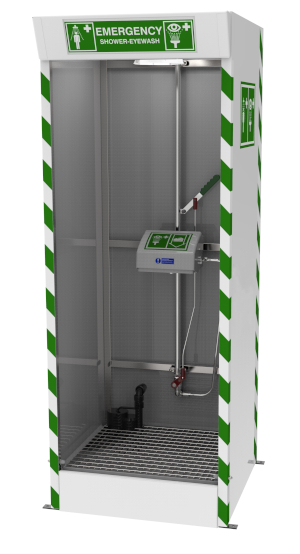
When an Eyewash Station or Safety Shower May Be Needed
Once higher-risk operational areas have been identified, facilities can assess what emergency response measures may be appropriate for those environments. The decision to install an eyewash station or safety shower should be based on factors such as:
- The type of substance being handled
- The likelihood of splash or direct contact
- How close personnel work to the hazard
- The nature and frequency of maintenance activity
In some environments, local emergency eyewash provision may be appropriate where there is a risk of chemical splashes affecting the eyes during servicing, testing or handling procedures. Higher-risk plant areas or environments involving larger-volume chemical handling may require a safety shower or combined emergency safety shower and eyewash unit to support full-body decontamination following accidental exposure.
Rapid response is critical in limiting the severity of chemical burns. Emergency safety showers and eyewash equipment should therefore be positioned so personnel can reach them immediately following exposure. Industry standards also provide guidance around travel distance, accessibility and visibility requirements.
Equipment should be clearly visible, easily accessible, well-lit and free from obstruction. This is particularly important within plant and maintenance environments where personnel may need to navigate around infrastructure or confined spaces during an emergency response.
Different operational environments may also require different emergency shower solutions. In electrical or confined spaces, cubicle safety showers with integrated sumps may help contain contaminated water and prevent runoff from spreading into surrounding operational areas.
Where ambient conditions or infrastructure layouts could affect water temperature, temperature-controlled emergency safety showers may help maintain a suitable flushing temperature during an emergency.
In addition, facilities operating in remote areas or locations with limited mains water availability may consider self-contained or tank-fed emergency safety showers as part of wider resilience and emergency preparedness planning.
Questions to Ask During a Data Centre Chemical Risk Assessment
Chemical hazards within data centres are often linked to specific infrastructure environments, maintenance procedures and operational activities. Effective risk assessment should focus on where exposure risks are most likely to occur and whether appropriate emergency response measures are already in place.
When reviewing chemical exposure risks across a data centre environment, facilities teams may wish to consider the following questions:
- What chemicals are stored, handled or dosed on site?
- In which operational areas could splashes, spills or direct contact occur?
- Which maintenance or servicing tasks create the greatest exposure risks?
- Are contractors exposed to hazardous substances during routine activity?
- Are higher-risk environments equipped for immediate emergency response?
- Is emergency equipment positioned close enough to the point of risk?
- Are emergency access routes clearly visible and always free from obstruction?
- Have workplace exposure limits been considered where appropriate?
- Do maintenance procedures and emergency planning align with the actual level of chemical hazard present within each area?
By asking these questions, facilities can build a clear understanding of where chemical hazards exist within the site and whether existing emergency response arrangements are suitable for the operational risks involved.
Supporting Safer Emergency Response in Data Centres
While data centres are often associated with electrical resilience and uptime protection, supporting systems such as battery backup, cooling plant and water treatment may still introduce chemical hazards that require careful assessment and emergency preparedness planning.
By identifying where splash, spill or contact hazards may arise, facilities can help ensure emergency eyewash stations and safety showers are positioned appropriately to support rapid decontamination and worker safety during an incident.
Hughes Safety Showers supports critical infrastructure facilities with emergency decontamination solutions designed for demanding operational environments, helping sites assess suitable emergency eyewash and safety shower provision for higher-risk plant and maintenance areas.
For advice on the most suitable solution for your application or to request a quote, contact us today.


