

Enquiry List () (0)


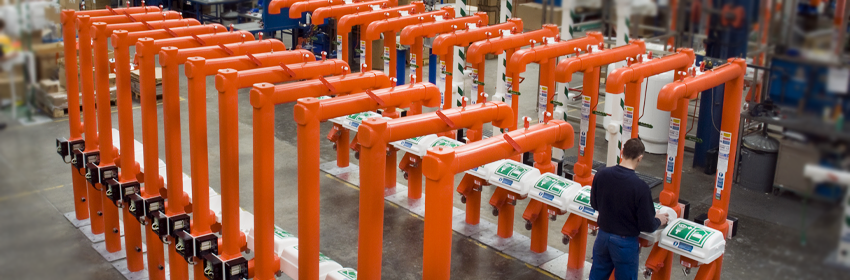
 Engineered Emergency Safety Shower Solutions
When a standard safety product cannot meet the environmental, operational or technical demands of your project, Hughes can develop an emergency safety shower or eye/face wash solution to meet your exact requirements.
Our mechanical, electrical and instrumentation engineers work with EPCs, engineering consultants and site teams to address challenges including extreme temperatures, hazardous areas, restricted installation spaces, limited water supplies and project-specific control requirements.
To discuss your project, call 0161 430 6618, use our online enquiry form or speak to the Hughes team through live chat, available from 9am to 5pm.
When is an Engineered Solution Required?
A customised emergency safety shower or eye/face wash may be required when site conditions, available utilities or project specifications cannot be met by a standard product.
This may include projects involving:
- Extreme heat, freezing temperatures or changing climates
- Limited, unreliable or unavailable mains water supplies
- Requirements to provide and maintain tepid water
- Hazardous-area electrical classifications
- Corrosive, marine or high-salinity environments
- Restricted footprints, access routes or installation heights
- Drainage or contaminated-water containment requirements
- Integration with plant alarms, monitoring systems or control panels
- Non-standard activation methods
- Project-specific materials, coatings or finishes
- Remote locations where maintenance access is limited
- Specifications that combine several mechanical, electrical and environmental requirements
By identifying these constraints early, Hughes can develop an emergency solution around the practical demands of the site rather than forcing a standard product into an unsuitable application.
What Can Hughes Customise?
Hughes can adapt the design, construction and operation of emergency safety showers and eye/face washes to suit the demands of a specific site or project.
Customisation may include:
Water Supply and Temperature Control
- Tank-fed, mains-fed or gravity-fed configurations
- Heating, insulation or cooling systems
- Recirculating pipework
- Temperature monitoring
- Flow and pressure management
- Alternative inlet arrangements
Mechanical Design
- Product dimensions and layout
- Pipework and structural materials
- Cubicles, frames and access platforms
- Sumps and drainage arrangements
- Restricted-space configurations
- Mounting and structural adaptations
Electrical and Instrumentation
- Audible and visual alarms
- Remote activation alerts
- Junction boxes and switches
- Hazardous-area electrical components
- Lighting
- Integration with site monitoring or control systems
Materials and Environmental Protection
- Corrosion-resistant materials
- Stainless steel components
- GRP enclosures
- Specialist coatings and finishes
- Protection for marine, coastal, hot or freezing environments
Activation and Access
- Pull handles
- Panic bars
- Foot panels
- Platform activation
- Sensor activation
- Alternative access arrangements
The final specification will depend on the site environment, applicable standards, available utilities and the operational requirements of the project.
From Initial Specification to Commissioned Equipment
Every customised project begins with a clear understanding of the site, the emergency requirements and the technical constraints involved.
1. Understand the Requirement
Hughes reviews the site environment, available utilities, installation constraints, project specifications and operational requirements.
2. Develop the Engineering Brief
The mechanical, electrical and instrumentation requirements are defined, together with the relevant standards, materials, controls and documentation needed for the project.
3. Design the Solution
The engineering team develops the proposed configuration using SolidWorks® CAD software, incorporating the agreed dimensions, materials, components and optional systems.
4. Review and Approve
Drawings and technical information are provided for customer, consultant or EPC review before manufacture begins.
5. Manufacture and Test
The equipment is manufactured and inspected against the approved design and agreed project requirements. Where required, third-party inspection and testing can also be arranged.
6. Install, Commission and Support
Hughes can provide installation, commissioning, training and after-sales support to help ensure the equipment is ready for use in an emergency and maintained throughout its service life.
Designed Around the Requirements of Your Project
The standards, site requirements and customer specifications that apply to a customised solution are identified at the start of the project and continually considered throughout the design and review process.
Depending on the location, application and agreed project scope, this may include requirements relating to EN 15154, ANSI/ISEA Z358.1, hazardous-area classifications and project-specific engineering standards.
Hughes can also support agreed inspection, testing and documentation requirements, including third-party involvement where required.
For more information on the performance, installation, testing and maintenance recommendations for emergency safety showers and eye/face washes, visit our EN and ANSI standards guidance.
Engineered Solutions in Action
Hughes has developed engineered emergency solutions for projects where climate, utilities, site conditions and operating requirements made standard equipment unsuitable.
Trusted by Oil & Gas Operators
Discover how oil and gas operators worldwide rely on Hughes emergency safety showers to support compliance and ensure reliable emergency decontamination in hazardous environments.
Why Work with Hughes?
Hughes combines specialist emergency equipment knowledge with the engineering capability needed to support complex industrial projects.
Coordinated Engineering Support
Mechanical, electrical and instrumentation requirements can be considered within one coordinated project.
Proven Product Platforms
Where appropriate, customised solutions can be developed from established Hughes emergency safety shower and eye/face wash designs, reducing the need to create every element from the ground up.
Support for Complex Specifications
Hughes works with EPCs, engineering consultants and site teams to review technical requirements, resolve design constraints and produce the agreed project documentation.
Experience in Challenging Environments
Hughes has delivered engineered emergency equipment for remote sites, extreme climates, hazardous areas and projects with complex water, materials and control requirements.
Who Hughes Works With
Hughes supports EPC contractors, engineering consultants, procurement teams, health and safety professionals, site engineers and specialist distributors involved in specifying, sourcing or upgrading emergency safety equipment.
Whether the requirement is at an early design stage or part of an active project, the Hughes team can help review the application and identify the most appropriate route forward.
Tell Us About Your Project
You do not need to have a completed specification before contacting Hughes. However, sharing some initial project information can help the engineering team understand the requirement and identify the right next steps.
Useful details may include:
- Site location and operating environment
- The hazardous substances or exposure risks involved
- Whether the equipment will be installed indoors or outdoors
- Minimum and maximum ambient temperatures
- Available water supply, pressure and flow
- Available electrical supply
- Hazardous-area classification
- Applicable standards or project specifications
- Space, access or installation restrictions
- Drainage or containment requirements
- Required alarms, controls or monitoring
- Project quantity and delivery programme
- Any relevant drawings, datasheets or tender documents
To discuss your requirement, call 0161 430 6618, use our online enquiry form or speak to the Hughes team through live chat, available from 9am to 5pm.
Frequently Asked Questions
When is a customised emergency safety shower required?
A customised solution may be needed when a standard emergency safety shower or eye/face wash cannot meet the environmental, operational or technical requirements of the site. This could include extreme temperatures, limited water supplies, hazardous-area classifications, restricted installation space or project-specific control requirements.
Can a customised solution be created from an EPC or consultant specification?
Hughes can review project specifications, drawings and technical requirements supplied by EPC contractors, engineering consultants and site teams, then develop a suitable emergency solution around the agreed criteria.
Can an existing product be modified?
Where appropriate, customised solutions can be developed from an established product. The extent of any modification will depend on the required dimensions, materials, utilities, electrical components and operating conditions.
Can equipment be designed for hazardous areas?
Hughes can review the hazardous-area classification and identify suitable electrical and instrumentation requirements for the project. The final design, components and documentation will depend on the applicable regional standards and project specification.
Can equipment be designed for extreme temperatures?
Hughes has developed emergency equipment for both freezing and high-temperature environments. Depending on the application, the solution may include insulation, heating, cooling, recirculating pipework or temperature-monitoring systems.
Can alarms and remote monitoring be included?
Audible and visual alarms, remote activation alerts and integration with site monitoring or control systems may be included where required. The available options will depend on the site infrastructure and agreed project scope.
Are installation and commissioning supported?
Installation, commissioning, training and after-sales support can be included as part of the project. Availability may vary by location and may be delivered directly by Hughes or through approved service partners.
What project documentation is provided?
Depending on the agreed scope, project documentation may include drawings, datasheets, operating and maintenance manuals, test records, certificates and other technical information required for review or handover.
How long does a customised project take?
Lead times depend on the complexity of the design, required approvals, component availability, testing requirements and project quantity. Hughes can provide an indicative programme once the initial specification has been reviewed.
Can Hughes develop a one-off solution?
One-off and low-volume projects may be considered where there is a clear technical requirement. Feasibility will depend on the engineering scope, certification requirements and overall project requirements.


